Skip to content

Modern life moves fast. Many people feel tired, stressed, unfocused, or overwhelmed. Others want natural ways to improve their health without depending only on medicine. More people today also care about longevity—living more years with clarity, calmness, and energy.
This is where Neurofeedback becomes a powerful tool.
Neurofeedback helps your brain learn how to work in a more balanced and healthy way. It is safe, gentle, and backed by science. It supports mental health, emotional wellbeing, and long-term vitality. Many people now include it in their longevity journey because a stable brain is key to healthy aging.
This guide explains neurofeedback in simple terms, so anyone can understand it.
What Is Neurofeedback?
Neurofeedback is brainwave training.
It teaches your brain how to stay calm, balanced, and focused by giving it real-time information about how it is working.
You can think of it like a mirror for your brain.
When your brain “sees” itself, it can adjust and learn better patterns.
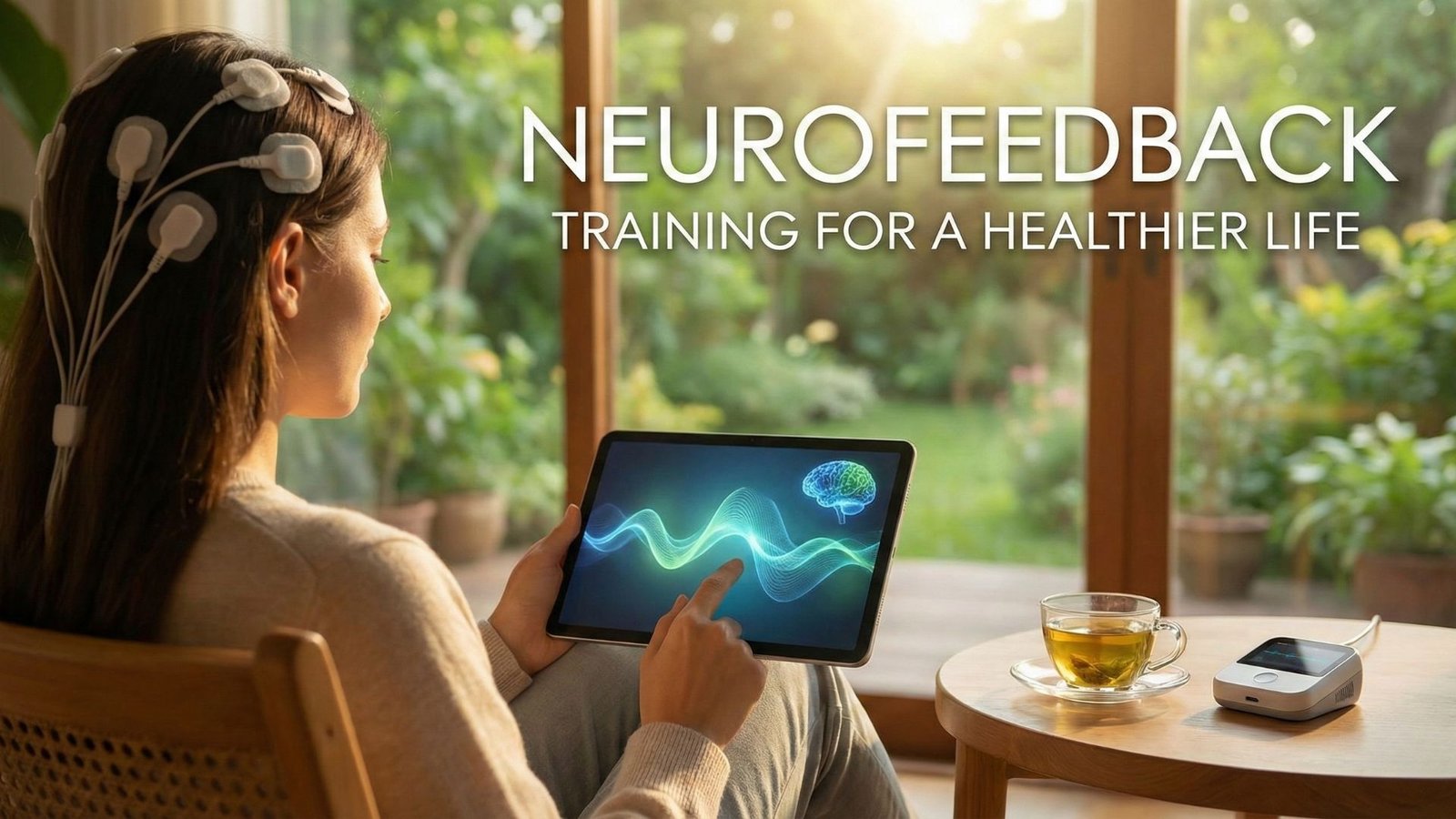
This happens through sensors placed gently on your scalp. These sensors read electrical activity in your brain, known as brainwaves. A computer then shows how your brainwaves behave. When your brain enters a balanced state, the computer rewards it with clear images, stable sounds, or smooth movement in a simple game.
Over time, the brain learns to stay in this healthier state, even outside the session.
This is neuroplasticity—the brain’s natural ability to grow and change.
How Neurofeedback Works (Step by Step)
1. You sit in a comfortable chair.
The space is calm. There is no pain and no stimulation.
2. Sensors are placed on your scalp.
These sensors only listen. They do not send electricity into your brain.
3. The computer reads your brainwaves in real time.
It tracks your brain’s activity moment by moment.
4. You watch a screen or listen to audio.
When your brain is calm and balanced, the screen works smoothly.
When your brain becomes stressed or unfocused, the image may dim or pause.
5. Your brain learns from this feedback.
With each session, your brain becomes better at staying balanced.
Because the brain learns through repetition, the improvements slowly become natural and automatic.
Understanding Brainwaves
Each brainwave has a different purpose:
Delta – deep sleep
Theta – creativity and daydreaming
Alpha – light relaxation
Beta – focus and thinking
High Beta – stress and anxiety
When they are balanced, you feel clear and stable.
When they are not balanced, you may feel stressed, tired, distracted, or overwhelmed.
Neurofeedback helps bring these waves back into harmony.
Benefits of Neurofeedback
People turn to neurofeedback for many reasons.
Here are the most common benefits:
• Better focus and concentration
Helps you stay on task and think clearly.
• Less anxiety and stress
Trains your brain to stay calm even during pressure.
• Improved sleep
Helps regulate your sleep cycle naturally.
• Emotional balance
Reduces overreactions and stabilizes your mood.
• Increased mental clarity
Helps with memory, decision-making, and creativity.
• Reduced burnout
Supports your nervous system after long periods of stress.
• Cognitive longevity
Keeps your mind strong as you age.
Why Neurofeedback Supports Longevity
Longevity is not just about living longer.
It is about living well—feeling present, clear, and emotionally steady.
Neurofeedback supports healthy aging because it directly improves the brain, which controls everything else in the body.
Here are the main reasons neurofeedback is a longevity tool:
1. It lowers chronic stress.
Stress is one of the biggest threats to long-term health. Neurofeedback reduces stress at the source.
2. It improves sleep quality.
Good sleep repairs your cells, balances hormones, and supports immunity.
3. It creates emotional resilience.
A balanced mind recovers faster from challenges.
4. It protects cognitive function.
It helps maintain sharp memory and flexible thinking.
5. It supports better health decisions.
A calm mind makes wiser choices for food, movement, and lifestyle.
6. It strengthens mind-body balance.
Longevity depends on both the brain and the body working together.
Who Can Benefit from Neurofeedback?
Neurofeedback is safe and useful for many people, including:
• Adults with high stress
Perfect for people with intense jobs or busy lives.
• People who want better focus
Helps professionals, students, and creatives.
• People with sleep difficulties
Improves the ability to fall asleep and stay asleep.
• Older adults wanting clarity
Supports memory and cognitive strength.
• People on a wellness journey
Pairs well with meditation, breathwork, and movement.
• Anyone wanting a natural approach
It is non-invasive and drug-free.
What a Neurofeedback Session Feels Like
A session feels simple and relaxing.
1. You sit in a comfortable chair.
The room is usually quiet and peaceful.
2. Sensors are placed on your scalp.
They only measure brain activity.
3. You watch a video or listen to sounds.
The feedback teaches your brain how to stay balanced.
4. Sessions last 30 to 45 minutes.
Many people feel lighter and calmer afterward.
5. Improvements grow over time.
The brain learns just like a muscle—slowly at first, then faster.
How Many Sessions Are Needed?
Every brain is different, but most people follow this simple pattern:
• Some feel changes after the first session.
Often in sleep or calmness.
• Most feel clear results after 4 to 6 sessions.
• Strong, long-lasting improvements usually come after 15 to 20 sessions.
The goal is not temporary results, but long-term change.
Is Neurofeedback Safe?
Yes.
Neurofeedback is very safe because:
- It is non-invasive
- It uses no drugs
- It does not force the brain
- It has been studied for over 50 years
- It is used in clinics and wellness centers worldwide
- It works through natural learning
The sensors only read activity.
Nothing is added to your brain.
The Science Behind Neurofeedback
Neurofeedback is built on several well-studied concepts:
• EEG technology
Reads electrical activity in the brain.
• Brainwave mapping
Shows patterns related to stress, focus, and calmness.
• Neuroplasticity
The brain’s natural ability to change and learn.
• Operant conditioning
Learning through feedback and rewards.
Today, neurofeedback is used by:
- Doctors
- Psychologists
- Coaches
- Athletes
- Pilots
- Musicians
- Wellness centers
It is becoming more popular because it helps people improve their mind without medication.
How Neurofeedback Fits Into Holistic Longevity
Neurofeedback does not replace tools like breathwork, meditation, or movement.
It strengthens them.
When your brain is calmer:
- You meditate more deeply
- Your breath slows naturally
- Your body relaxes faster
- Your emotions settle
- Your focus improves
- Your sleep becomes deeper
For people who want a more conscious, present life, neurofeedback is a smart and powerful companion.
The Future of Brain Health
People are beginning to understand how important the brain is for long-term health.
When the brain is stressed, life feels heavy.
When the brain is balanced, life feels easier.
Neurofeedback is part of a new wave of wellbeing tools that combine technology with self-awareness. It gives people a way to understand and train their inner world.
In the future, neurofeedback may become as common as meditation apps are today—an essential part of daily mental hygiene.
Final Thoughts: Training the Brain to Age Well
Neurofeedback is more than a therapy.
It is a way to support your mind at every stage of life.
It helps you focus, sleep better, stay calm, and think clearly. It supports emotional balance and reduces stress. And most of all, it helps build a strong foundation for long-term health and longevity.
Longevity is not only about living many years.
It is about living them with presence, autonomy, and joy.
Neurofeedback supports all three.