Skip to content

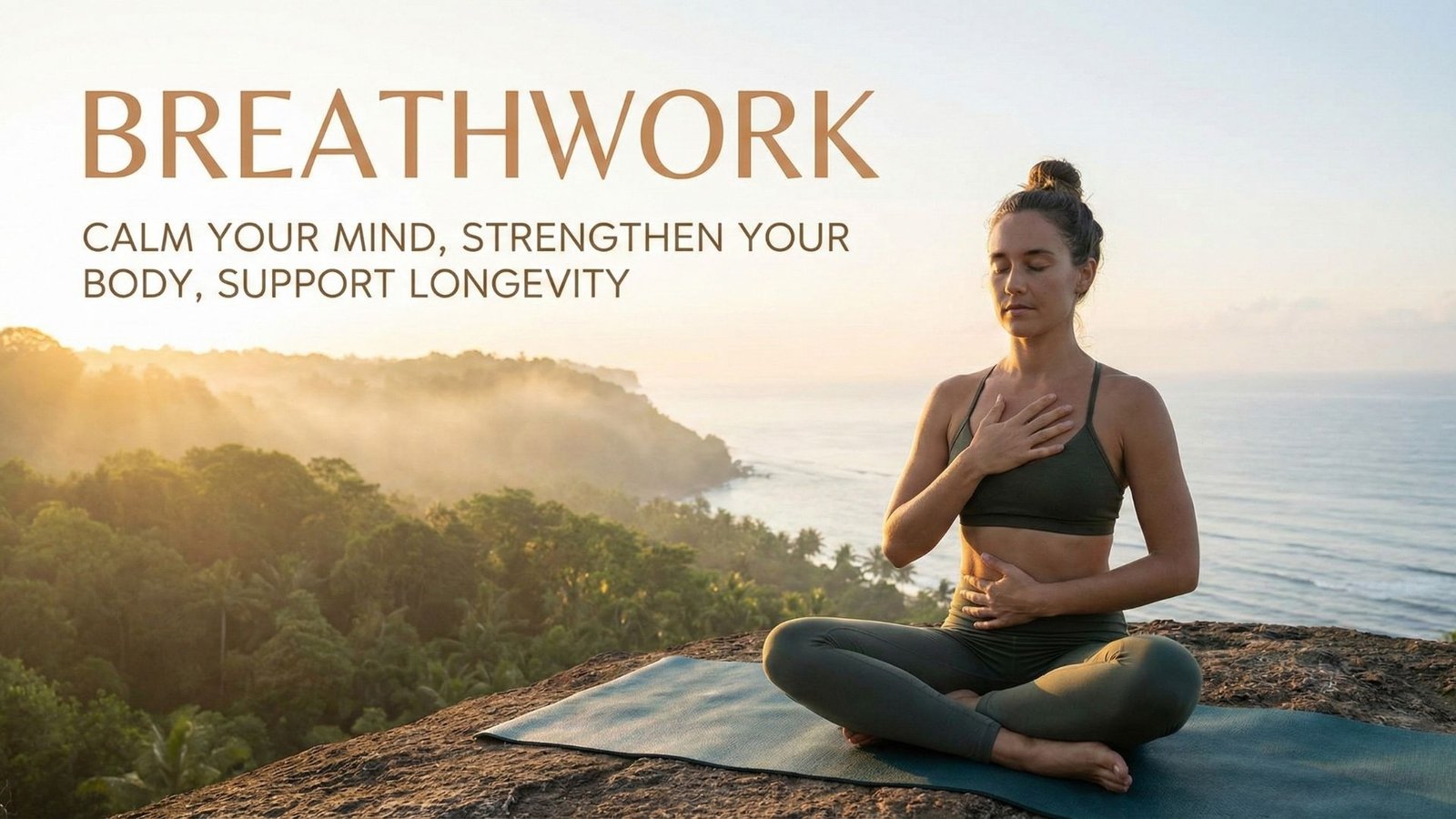
Most of us breathe without thinking. But in a world full of stress, fast schedules, and constant stimulation, our breathing often becomes shallow, quick, and unbalanced. This affects how we think, how we feel, how we sleep, and even how our body ages.
Breathwork is the practice of using intentional breathing patterns to calm the nervous system, increase energy, and bring the mind back into presence. It is one of the simplest and most powerful tools for improving long-term health.
This article explains breathwork in simple, clear words so anyone can understand it.
What Is Breathwork?
Breathwork is the practice of controlling your breath to change how your body and mind feel.
By breathing slowly, deeply, and with intention, you activate systems inside the body that:
- Reduce stress
- Improve oxygen flow
- Calm the mind
- Support emotional regulation
- Increase physical energy
Breathwork is safe, natural, and accessible to everyone. You don’t need equipment, special clothing, or prior experience. You only need your breath.
How Breathwork Works in the Body
Breathwork influences several important systems in the body:
1. The Nervous System
Slow and deep breathing activates the parasympathetic nervous system, which helps your body relax and recover.
2. Oxygen and Carbon Dioxide Balance
Breathwork improves how your body uses oxygen and removes carbon dioxide, supporting energy and reducing fatigue.
3. Heart Rate and Cardiovascular Health
A steady breath helps regulate your heartbeat, improving circulation and lowering stress.
4. Hormones and Stress Chemicals
Breathwork lowers cortisol—the stress hormone—and supports the production of calming chemicals.
5. Brain Function
Better breathing improves focus, clarity, memory, and emotional stability.
This is why breathwork is a key tool in wellness, longevity, and mental health.
Why Breathwork Supports Longevity
Long life is not only about what we eat or how much we move. It is also about how well our nervous system handles stress. Breathwork directly improves the body’s ability to return to balance.
Here’s why breathwork is essential for longevity:
1. It lowers chronic stress
Stress is one of the biggest factors that accelerates aging.
2. It improves sleep
Deep breathing helps the mind and body enter a state of rest.
3. It supports the heart and cardiovascular system
Breathwork improves circulation and heart rate variability—key markers of healthy aging.
4. It strengthens emotional resilience
You recover faster from tension, anxiety, or negative thoughts.
5. It increases oxygen flow to the cells
Healthy cells lead to healthier organs and immune function.
6. It brings the mind into the present moment
Living with awareness protects mental health over time.
Types of Breathwork
There are many styles of breathwork. Here are the most common and accessible:
• Box Breathing
Inhale 4 seconds → Hold 4 seconds → Exhale 4 seconds → Hold 4 seconds.
Calms the mind and stabilizes the nervous system.
• Diaphragmatic (Belly) Breathing
Slow, deep breaths into the belly.
Great for stress, digestion, and emotional balance.
• 4-7-8 Breathing
Inhale 4 → Hold 7 → Exhale 8.
Helps with sleep, anxiety, and relaxation.
• Coherent Breathing
Slow breathing at about 5–6 breaths per minute.
Balances heart and mind and supports longevity.
• Wim Hof / Controlled Hyperventilation
Fast breathing cycles followed by breath holds.
Boosts energy, cold tolerance, and mental strength.
(Should be practiced safely and with guidance.)
Each method has its own benefits, but all support calmness, balance, and clarity.
Benefits of Breathwork
People use breathwork for many reasons, including:
• Less stress and anxiety
Breathing deeply signals safety to the brain.
• Better focus and clarity
Oxygen supports brain performance.
• Improved sleep quality
Slow breathing prepares the body for rest.
• Better emotional regulation
Breathwork calms the body’s stress responses.
• Increased energy
Oxygen supports every cell in the body.
• Stronger lungs and respiratory health
Breathwork improves lung capacity and control.
• Lower blood pressure
Relaxed breathing naturally lowers tension.
• Enhanced mind-body connection
Breathing brings awareness to the present moment.
• Support for pain reduction
Deep breathing calms the nervous system and lowers pain signals.
Breathwork is powerful because it affects almost every system in the body.
Who Can Benefit From Breathwork?
Breathwork is safe for almost everyone, including:
- Busy professionals
- Athletes
- Older adults
- People with anxiety or stress
- People who struggle to sleep
- Individuals on a longevity journey
- Anyone wanting a clearer mind and calmer life
It requires no equipment and can be done anywhere.
What a Breathwork Session Feels Like
A typical breathwork session is relaxing and grounding.
1. You sit or lie down comfortably.
Many people close their eyes.
2. You follow a guided breathing pattern.
The rhythm helps quiet the mind.
3. The body starts to relax.
Muscles soften, shoulders drop, heartbeat slows.
4. Thoughts become quieter.
Breathwork brings you into the present moment.
5. At the end, you feel lighter and more centered.
Some feel energized. Others feel deeply relaxed.
Breathwork is gentle and can be adapted to your comfort level.
How Often Should You Practice Breathwork?
You can practice breathwork:
- Daily for long-term benefits
- Before sleep to calm the mind
- In the morning to increase energy
- During stress to regain balance
- Before meetings or workouts to focus
Just 5 minutes a day can make a difference.
10–20 minutes brings deeper benefits.
Consistency is more important than duration.
Is Breathwork Safe?
Yes, most breathwork techniques are safe.
However, fast breathing practices should be done carefully, and people with certain medical conditions should consult a professional.
Gentle breathwork (like belly breathing) is safe for almost everyone.
The Science Behind Breathwork
Breathwork is supported by strong scientific foundations:
• It activates the vagus nerve
This improves relaxation, digestion, and stress recovery.
• It improves HRV (Heart Rate Variability)
High HRV is linked to longevity and resilience.
• It lowers cortisol levels
Lower stress hormones help protect long-term health.
• It improves oxygen-carbon dioxide balance
This supports energy, brain health, and emotional stability.
• It enhances neuroplasticity
Breathwork helps the brain adapt and learn new patterns.
Breathwork may seem simple, but its biological impact is powerful.
Breathwork in Holistic Longevity Programs
Breathwork pairs perfectly with:
- Meditation
- Movement practices
- Cold exposure
- Sauna
- IV Therapy
- Vagus Nerve Stimulation
- Neurofeedback
- Journaling
- Sound healing
When your breath is calm and steady, every wellness practice becomes more effective.
The Future of Breathwork
Breathwork is becoming a central part of modern wellbeing. The future may include:
- Personalized breathwork programs
- Wearables that guide breath in real time
- Longevity clinics using breath training daily
- Breathwork for emotional resilience
- Breath-centered recovery programs
The world is rediscovering something ancient and simple:
Your breath is one of the most powerful tools for healing.
Final Thoughts: Breath As a Path to a Longer, Calmer Life
Breathwork is more than a technique.
It is a return to presence.
It calms the mind, supports the heart, strengthens the nervous system, and increases energy. It helps the body repair itself and improves mental clarity. And most importantly, it supports long-term health by reducing stress—the number one enemy of longevity.
A long life begins with a calm breath.
When you control your breath, you control your state of being.