Skip to content

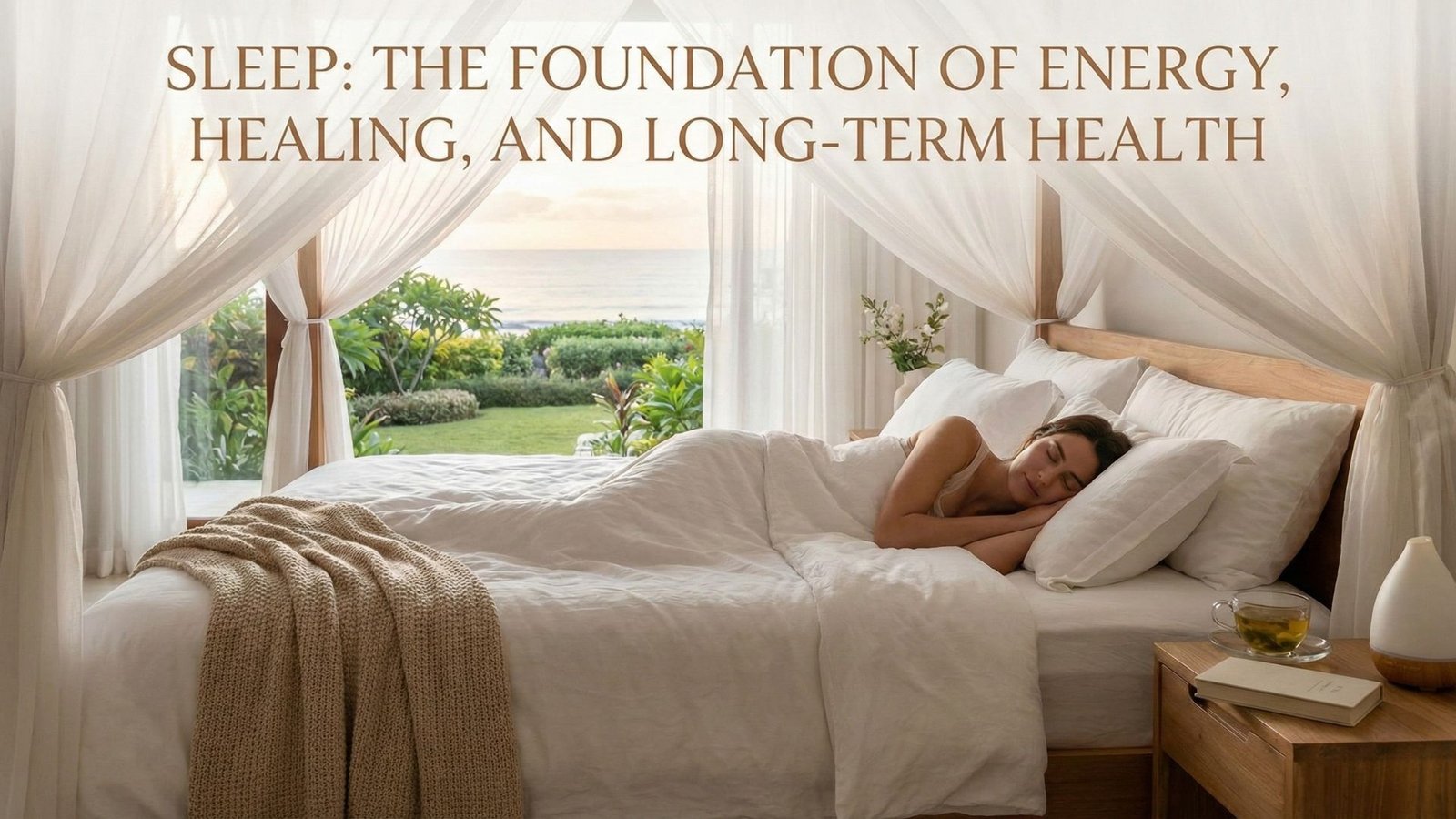
In a world full of noise, screens, and constant activity, many people wake up tired, unfocused, or stressed. Even when we go to bed early, our mind sometimes stays awake. Over time, poor sleep affects our mood, memory, immune system, and even how fast we age.
Sleep is not a luxury.
Sleep is a biological need—just like food, water, and air.
When you sleep well, your body repairs itself, your mind becomes clear, and your energy returns. Good sleep is one of the strongest foundations for longevity, mental health, and physical wellbeing.
This guide explains sleep in simple, clear words so anyone can understand why it matters and how to protect it.
Why Sleep Matters
Sleep is when your body and mind do their deepest healing.
During sleep, several important things happen:
- Your brain removes toxins
- Your immune system becomes stronger
- Your cells repair and regenerate
- Your hormones balance
- Your mood stabilizes
- Your memory organizes
Without quality sleep, even the best diet or exercise plan cannot support long-term health.
Good sleep is the “master switch” of wellbeing.
How Sleep Works (Simple Explanation)
Your sleep runs on an internal rhythm called the circadian cycle. This natural clock tells your body:
- When to feel awake
- When to feel sleepy
- When to repair
- When to release certain hormones
- When to rest your brain
Light is the main signal for this clock.
This is why screens, late-night activities, and stress confuse your rhythm and make it harder to sleep.
Sleep also works in cycles:
1. Light Sleep
Your body relaxes and your heart rate slows.
2. Deep Sleep
Your muscles and tissues repair. This stage is essential for physical recovery.
3. REM Sleep
Your brain processes emotions, memories, and creativity.
You move through these cycles several times per night.
When sleep is interrupted, these cycles break, and your energy suffers.
Why Good Sleep Supports Longevity
If you want to live a long and healthy life, sleep must be a priority.
Here’s why:
1. It reduces chronic stress
Good sleep lowers cortisol and calms the nervous system.
2. It boosts your immune system
During sleep, the body produces protective cells that fight illness.
3. It protects your brain
Deep sleep clears toxins linked to memory loss and cognitive decline.
4. It balances hormones
Sleep regulates appetite, metabolism, and emotional health.
5. It helps your heart
Sleep lowers blood pressure and supports cardiovascular function.
6. It strengthens emotional resilience
You handle pressure better and recover faster from stress.
7. It supports healthy aging
Cell repair, skin health, and long-term vitality depend on deep, restorative sleep.
Good sleep is one of the strongest predictors of long-term health and lifespan.
Signs You Are Not Sleeping Well
Even if you sleep many hours, you may not be getting quality sleep.
Here are common signs:
- Waking up tired
- Needing caffeine to function
- Waking up during the night
- Feeling stressed or anxious in the morning
- Trouble falling asleep
- Poor focus or memory
- Low energy during the day
- Irritability or emotional swings
These are signs the nervous system and circadian rhythm need support.
Benefits of Good Sleep
When you sleep well, everything feels easier:
• More energy
You wake up ready to start the day.
• Better focus
Clear thinking and stronger memory.
• Emotional stability
Less stress and more patience.
• Stronger immunity
Your body fights viruses and bacteria more effectively.
• Healthier metabolism
Better digestion, weight control, and hormone balance.
• Improved physical performance
Better workouts, faster recovery, and stronger muscles.
• Slower aging
Your cells repair while you sleep, keeping the body stronger over time.
Common Sleep Disruptors
Understanding what hurts your sleep is the first step to improving it.
Here are the main disruptors:
- Screen light at night
- Stress and overthinking
- Late meals
- Alcohol or caffeine in the evening
- Irregular sleep schedules
- Noise and artificial light
- A hot bedroom
- Chronic anxiety
- Excessive work before bedtime
Small changes in these habits can dramatically improve sleep quality.
Simple Habits for Better Sleep
Here are easy and effective habits for deeper, healthier sleep:
1. Create a Sleep Routine
Go to bed and wake up at the same time every day.
2. Limit Screens at Night
Turn off screens at least 1 hour before sleep.
3. Make Your Room Cool and Dark
A cool temperature helps the body fall asleep faster.
4. Practice Relaxing Breathwork
Deep breathing signals safety to your nervous system.
5. Avoid Heavy Meals Late at Night
Digestion can keep the body awake.
6. Reduce Caffeine After 2 p.m.
Caffeine stays in your system for many hours.
7. Journal or Brain-Dump
Write down thoughts to prevent overthinking.
8. Use Light Wisely
Get natural sunlight in the morning to regulate your circadian rhythm.
9. Create a Wind-Down Ritual
Tea, light stretching, reading, or meditation help the body prepare for sleep.
Sleep and the Nervous System
Your nervous system greatly affects how well you sleep.
If your body stays in “fight or flight” mode, falling asleep becomes harder.
Practices like:
- Breathwork
- Meditation
- Vagus Nerve Stimulation
- Gentle movement
- Warm baths
- Mindfulness
- Slow evening walks
- Radiofrequency therapy for relaxation
all help shift the body into “rest and digest,” which is necessary for healthy sleep.
The Role of Stress in Sleep Quality
Stress is one of the main reasons people struggle with sleep.
When the mind stays busy, the body cannot relax.
Chronic stress:
- Increases cortisol
- Keeps the heart rate high
- Disrupts digestion
- Activates the nervous system
- Makes it harder to enter deep sleep
Learning to calm the mind is essential for improving sleep over time.
Sleep and Longevity Programs
Sleep works beautifully with other longevity tools:
- Neurofeedback
- IV Therapy
- Breathwork
- Vagus Nerve Stimulation
- Red light therapy
- Gentle movement
- Healthy nutrition
- Structured morning routines
When sleep improves, these tools become even more effective.
Good sleep is the foundation of all wellness practices.
How Much Sleep Do You Really Need?
Most adults need 7–9 hours of quality sleep each night.
Some people feel best with 8–9 hours.
Older adults may enter more light sleep, so routines matter even more.
Quality is just as important as quantity.
Final Thoughts: Sleep as a Path to a Longer, Better Life
Sleep is one of the most powerful tools for long-term health.
It restores your body, clears your mind, strengthens your heart, and balances your hormones. Good sleep supports emotional health, focus, immunity, and healthy aging.
When you sleep well, life feels lighter, clearer, and more manageable.
If you want a long and healthy life, start by honoring your sleep.
A long life begins with a peaceful night.